Static vs. Rotating Proxies in 2026: How IP Rotation Services & Sticky Sessions Work
Detailed comparison of static vs. rotating proxies and IP rotation services in 2026. Learn when to use sticky sessions, rotating ports, or static ISP IPs.
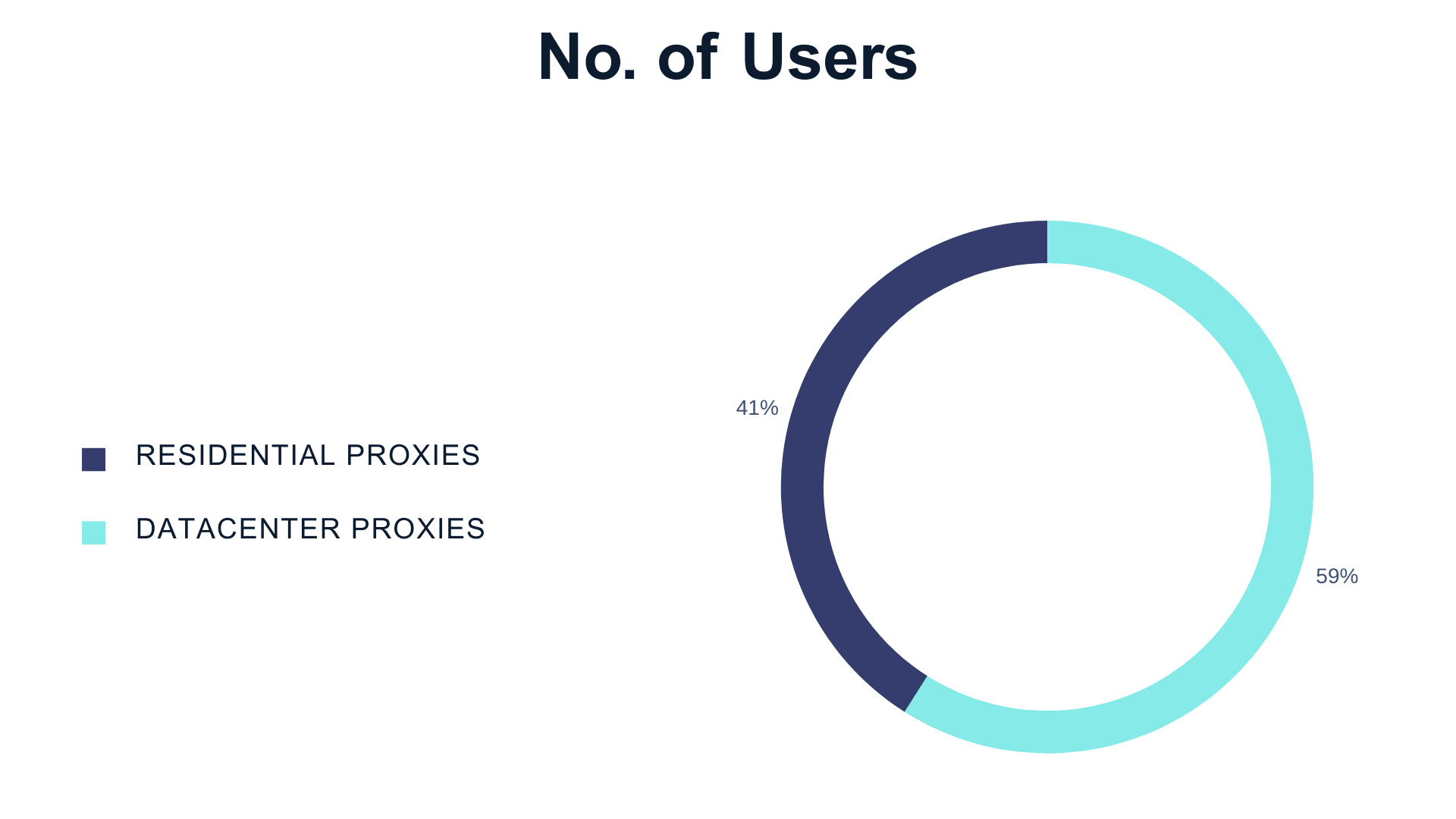
Detailed comparison of static vs. rotating proxies and IP rotation services in 2026. Learn when to use sticky sessions, rotating ports, or static ISP IPs.
In the realm of web data collection, proxies play a vital role, allowing businesses to gather critical information while navigating the restrictions imposed by websites. This article delves into the differences between static and rotating proxies, helping you determine which option best suits your needs. We'll also highlight how ProxyTee can enhance your online activities with its range of proxy solutions.
What is a Proxy?
A proxy server acts as a gateway between you and the websites you visit, providing anonymity and circumventing restrictions. When you use a proxy, your internet traffic is routed through an intermediary server, hiding your actual IP address and location. This is crucial for tasks like web scraping, which is often blocked by websites trying to protect their data.
Why are Proxies Needed?
Many businesses rely on web data to support operations like ad verification, price monitoring, social media analysis, and reputation management. However, websites often enforce rules limiting the data that can be collected. These restrictions can include geographical limitations and request volume limits, which can result in blocked pages or CAPTCHAs.
Proxies help bypass these barriers by using IP addresses that appear to be legitimate visitors, allowing you to gather necessary data without being detected or blocked. ProxyTee offers both static and rotating proxies, each with its own advantages and ideal use cases.
What is a Static Proxy?
A static proxy has a fixed IP address that does not change. These proxies are typically leased from data centers or ISPs. They are beneficial because they provide a single point of contact, which leads to faster connection speeds since there is only one hop between you and the target website. They can be kept 'for life' so long as you still need them.
However, static proxies have limitations. Depending on your needs, a static IP may not be enough to target every required location or may be more easily detected by sophisticated sites.
What is a Rotating Proxy?
Rotating proxies, like those offered by ProxyTee, use a dynamic pool of IP addresses. Your IP address changes automatically after a set amount of time, after a certain number of requests, or whenever the current IP becomes unavailable. The addresses typically originate from residential and mobile devices, making them harder to detect by websites. ProxyTee's Unlimited Residential Proxies are an excellent solution to bypass any geo-restrictions while scraping data.
Rotating proxies are excellent because of the vast number of real-user IP addresses they use. However, they are often slower than static proxies because they have an extra 'hop' needed to find a new IP. Additionally, these IPs may have less bandwidth and can sometimes be pricier since the provider must collect and manage a large number of IP addresses.
Static and Rotating Proxies Comparison
Here’s a quick comparison to help you decide which proxy type is right for you:
| Static Proxies | Rotating Proxies | |
|---|---|---|
| IP Addresses | Fixed. Leased from data centers or ISPs. | Variable. New IP addresses are rotated in automatically. |
| Best for | Simple sites; fast performance; long term access | Complex sites; bypassing sophisticated detection mechanisms. Ideal for data scraping and bypassing geographic restrictions |
| Block Risk | More easily detectable | Harder to detect |
Static vs. Rotating Proxies Use Cases
The most common use cases include:
Static Proxy Use Cases
- Ad Verification: Ensuring ads are correctly displayed to specific audiences.
- Network Penetration Testing: Facilitating the volume, speed and anonymity for penetration tests.
- Social Media Account Management: Managing multiple accounts from different geolocations. Can be combined with antidetect browsers.
- Reputation Management: Collecting information about your company's online reputation.
Rotating Proxy Use Cases
- eCommerce Market Analysis: Gathering data on pricing and product availability of competitors.
- Business Intelligence: Scraping sensitive public data requiring a high level of anonymity, ideal for data scraping and business intelligence.
Conclusion
Both static and rotating proxies have their own set of pros and cons. When deciding which type you need, ask yourself:
- How complex is the website I want to scrape?
- Do I need IPs for the long term?
- Do I need to start working immediately?
With these answers in mind, explore ProxyTee and its product lineup of Residential Proxies, Unlimited Residential Proxies, Static Residential Proxies, Mobile Proxies and Datacenter Proxies. ProxyTee's commitment to offering reliable, affordable, and user-friendly solutions means that you’ll find the right proxy type to suit your needs, with key features like unlimited bandwidth unlimited bandwidth, global IP coverage global IP coverage, and flexible protocols flexible protocols.
Take advantage of our competitive pricing and auto-rotation features, along with our easy to use GUI GUI. Our simple API integrates well with any project to get you up and running quickly.
How an IP Rotation Service Works Under the Hood
When developers search for an IP rotation service or proxy rotation service, they are typically looking for a backconnect proxy gateway that eliminates manual proxy list maintenance. Instead of scraping and validating hundreds of dead IP addresses in your application code, a managed rotating IP proxy service handles health checks, ASN diversity, and automatic IP replacement at the gateway layer:
- Single Backconnect Endpoint: Your application points to one fixed gateway host and port while the backend pool cycles through 30M+ residential IPs across 100+ countries.
- Configurable Rotation Timers (3–60 Minutes): Keep a sticky residential IP for up to 60 minutes to complete stateful workflows, or rotate every 3 minutes for high-volume data harvesting.
- Unmetered Port Throughput: Unlike per-GB proxy rotation services that bill you for every megabyte of response headers and HTML, ProxyTee's unlimited bandwidth ports let your rotating proxy servers run 24/7 at a fixed monthly rate.
2026 Comparison Table: Static Proxies vs. Rotating Proxies vs. Sticky Sessions
| Feature / Metric | Static Proxies (Datacenter / ISP) | Rotating Residential Proxies (3–5m) | Sticky Rotating Sessions (15–60m) |
|---|---|---|---|
| IP Address Lifecycle | Fixed IP for days, weeks, or months | Automatically switches every 3–5 minutes | Maintains the same residential IP for up to 60m |
| ASN & Trust Score | Datacenter or Commercial ISP ASN | Real Household Residential ISP ASN | Real Household Residential ISP ASN |
| CAPTCHA & Block Resilience | Moderate (vulnerable to rate limits on 1 IP) | Maximum (requests distributed across 30M+ IPs) | High (combines session continuity + residential trust) |
| Best Use Cases | Whitelisted API access, single-account management | Bulk web scraping, SERP tracking, price monitoring | Travel fare aggregation, multi-step checkouts, social media |
Choose the Right Proxy Strategy with ProxyTee
Whether your pipeline calls for high-speed Datacenter Proxies, 4G/5G Mobile Proxies, or Unlimited Rotating Residential Proxies, ProxyTee gives you full protocol flexibility (HTTP & SOCKS5) and programmatic control via our Simple API. Also read our deep dives on ISP Proxies vs. Residential Proxies and Cheap Rotating Proxies with Unlimited Bandwidth.
Recommended ProxyTee Configuration & Bandwidth Benchmark
To run Static vs. Rotating Proxies in 2026: How IP Rotation Services & Sticky Sessions Work reliably in production without per-gigabyte overage fees, pair ProxyTee Unlimited Residential Proxies with our AdsPower Integration Guide and Ad Verification (Ad Tech) workflow. You can route traffic through localized household ISPs such as Thailand Residential Proxies (1,180,000+ IPs) or compare flat-rate port economics in our ProxyTee vs. Smartproxy (Decodo) benchmark.
Frequently Asked Questions
A static proxy assigns a single unchanging IP address to your connection, whereas an IP rotation service (rotating proxy) automatically assigns a fresh residential IP address from a pool of 30M+ IPs at customizable intervals (3 to 60 minutes) to prevent rate limits and IP bans.
Principal infrastructure engineer at ProxyTee specializing in rotating residential proxy networks, SOCKS5/HTTP tunneling, TLS fingerprint mitigation, and distributed data extraction pipelines.