Web Scraping vs API for Data Extraction in 2026
Web Scraping vs API explained with use cases, legal tips, and future trends for data extraction in 2026. Powered by ProxyTee unlimited residential proxies.
Web Scraping vs API explained with use cases, legal tips, and future trends for data extraction in 2026. Powered by ProxyTee unlimited residential proxies.
Web Scraping vs API is an important topic for developers, data analysts, and business owners who need to automate data extraction in 2026. As the internet continues to expand and digital services evolve, choosing the right method for collecting data has become increasingly critical. Both web scraping and APIs offer powerful tools for data access, but their use cases, legal aspects, and future relevance vary greatly. In this article, you will learn how these two methods differ, when to use each, and how to plan your data strategy around them. We will also explore important technical and legal factors, as well as emerging trends shaping data extraction today.
Understanding Web Scraping vs API
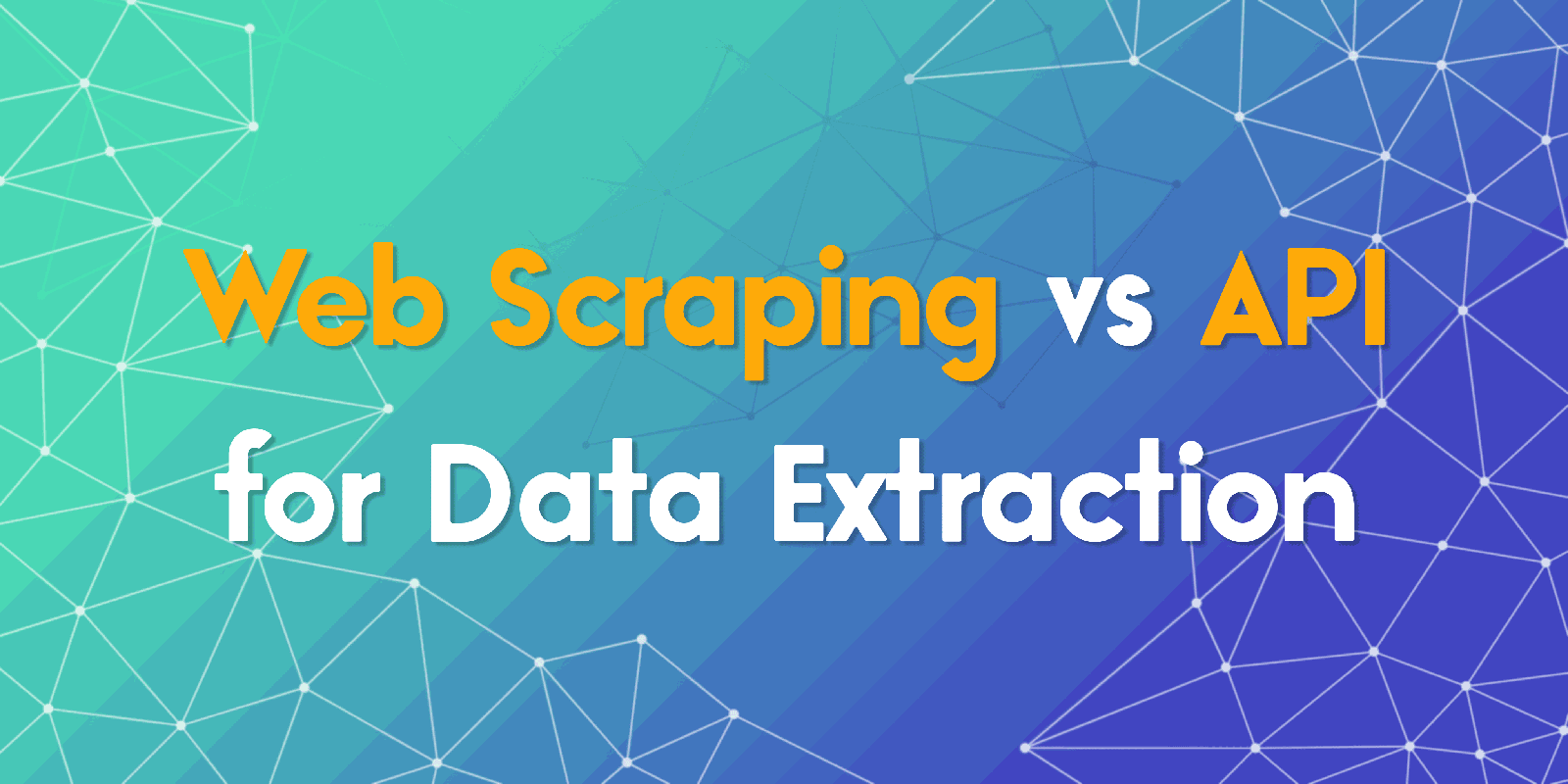
Web scraping is a method of extracting information from websites by simulating how a human would navigate a page. It uses scripts and tools to parse HTML and retrieve relevant content. In contrast, an API (Application Programming Interface) is a structured, programmatic way to access data that a provider has made available. These two methods represent the main paths to data extraction, each with its strengths and limitations.
The main difference in web scraping vs API is the source and structure of the data. Scraping extracts what is displayed on a website, while APIs provide backend access to data in a more organized format, typically in JSON or XML. Depending on your needs, one may be better suited than the other.
Use Cases for Web Scraping
Web scraping is ideal when data is available on a public-facing website but no API exists. Some common use cases include:
- Monitoring competitor prices in e-commerce
- Aggregating real estate listings across platforms
- Collecting financial news and updates from multiple sources
- Building search engine indexes or academic datasets
- Extracting public profiles or user-generated content
Because of its versatility, web scraping remains a go-to tool in fields like journalism, marketing intelligence, and AI training. When combined with residential proxies with unlimited bandwidth, it can access sites at scale without getting blocked.
Use Cases for APIs
APIs are the preferred method when websites or services provide official, structured access to their data. Key examples include:
- Social media platforms offering analytics endpoints
- Financial data providers like stock exchanges or forex services
- Weather and traffic reporting services
- Cloud services integrating authentication and file storage
- Retail product catalogs and live inventory data
APIs usually offer rate limits and authentication for security and control. When stable and well-documented, they provide clean data access with minimal overhead.
Legal Considerations for Web Scraping and APIs
Legal implications are essential in the discussion of web scraping vs API. While web scraping public content is often legal, scraping protected or copyrighted content may violate terms of service. Many websites use robots.txt files to signal their scraping policies, but that file is not legally binding. APIs, on the other hand, often include clear licensing terms, usage quotas, and access limitations that must be followed.
Developers must consider not only legality but also ethical use and platform compliance. Always evaluate the risks and permissions before scraping or calling any data service.
Future Trends in Data Extraction
Data extraction in 2026 is increasingly driven by automation, AI, and the need for real-time insights. Web scraping is evolving with headless browsers and advanced anti-bot evasion. At the same time, APIs are becoming more common as companies realize the benefits of structured data sharing.
However, APIs may not always offer full access to data that is publicly visible, leading many users to combine both scraping and API approaches. Hybrid models are expected to grow, blending scraping with API fallbacks and caching strategies.
Web Scraping vs API in Real Projects
Choosing between web scraping and APIs depends on various project needs:
- Need fast and structured data? Use API.
- Need data not available via API? Use web scraping.
- Need flexibility to extract from multiple sites? Use web scraping.
- Need clean integration and long-term access? Use API.
In practice, data teams often use both methods in different layers of their pipeline. Tools that support auto-retry, rate-limiting, and proxy rotation enhance scraping reliability. API integrations benefit from SDKs and endpoint documentation, reducing development time.
Comparing Key Factors: Web Scraping vs API
- Browser Support: Web scraping can simulate any browser, even dynamic ones using JavaScript. APIs do not depend on browser simulation.
- Ecosystem and Tools: Scraping relies on tools like Puppeteer, BeautifulSoup, and Selenium. API usage depends on tools like Axios, Postman, or Swagger.
- Language Support: Both methods are supported in all major languages including Python, Node.js, and Go.
- Setup Complexity: APIs are easier to set up due to clear endpoints and authentication. Scraping may involve solving CAPTCHAs and dealing with site structure changes.
- Speed and Scalability: APIs are usually faster, but web scraping with residential proxies with unlimited bandwidth can scale across large datasets.
- Community and Support: API support is provided officially by providers, while scraping has a large open-source community sharing tips and tools.
Final Thoughts on Web Scraping vs API
When considering web scraping vs API, the decision ultimately depends on data availability, technical requirements, and future flexibility. Scraping gives access to what is seen by users, even if it's not offered in structured form. APIs deliver clean, fast, and legally safer access to well-defined data. Blending both approaches provides maximum coverage and control over your data strategy in 2026.With the growth of residential proxies with unlimited bandwidth, scraping large volumes of content has become more reliable and scalable. APIs, meanwhile, continue to evolve with more real-time data, better documentation, and smarter authentication systems. To stay ahead, data teams must be fluent in both techniques and adapt them to each unique project goal.
For developers and data professionals in 2026, understanding when and how to use these tools will be the key to building robust, compliant, and future-proof data pipelines.
For a full side-by-side cost breakdown across 100 GB, 500 GB, and 1 TB monthly workloads, explore our Proxy Provider Comparison Hub—including direct benchmarks for ProxyTee vs. Bright Data, ProxyTee vs. Oxylabs, ProxyTee vs. Smartproxy (Decodo), ProxyTee vs. IPRoyal, and ProxyTee vs. Webshare.
Web Scraping vs. Official APIs Comparison Matrix (2026)
| Evaluation Criteria | Web Scraping (with ProxyTee Rotating Proxies) | Official Third-Party APIs |
|---|---|---|
| Data Coverage | 100% of publicly visible web pages & DOM fields | Restricted to fields exposed by the vendor endpoint |
| Rate Limits | Scales horizontally via 30M+ rotating residential IPs | Strict per-minute/daily quota caps & tier throttling |
| Cost at High Volume | Predictable flat port pricing (from $29/mo unlimited) | Escalating per-call or enterprise licensing fees |
| Real-Time Pricing & Geo Data | Captures true localized prices across 100+ countries | Often returns cached or non-localized catalog data |
| Maintenance Requirement | Requires HTML selector updates & anti-bot rotation | Low until API version deprecation or policy shutdown |
Need production-ready proxy settings and regional routing benchmarks? Review our technical guides on TikTok Multi-Account & Shop Proxies, Selenium & SeleniumBase Proxy Integration, Poland Residential Proxies, and ProxyTee vs. 922Proxy (922 S5) to maintain 99.9% uptime and predictable monthly infrastructure costs.
Frequently Asked Questions
Principal infrastructure engineer at ProxyTee specializing in rotating residential proxy networks, SOCKS5/HTTP tunneling, TLS fingerprint mitigation, and distributed data extraction pipelines.